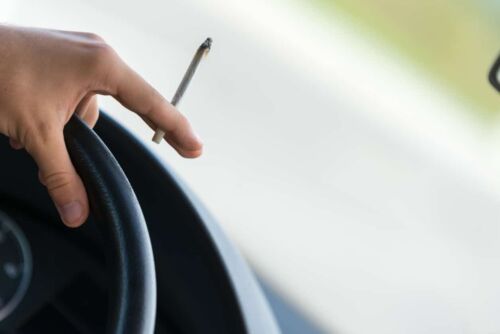
Even though marijuana is legal in Michigan, driving while under the influence of marijuana is still against the law. The crime of Operating Under the Influence of Drugs (OUID), commonly referred to as impaired driving or drugged driving, is treated similarly to an OWI / drunk driving charge. While the charges and potential penalties are the same, defending against a criminal charge of driving under the influence of drugs requires a specialized approach.
If you were charged with OUID in Michigan, you need an experienced and aggressive defense attorney who understands the nuances of an OUID charge and can mount an effective approach. Elmen Legal is located in Ann Arbor and represents people charged with OWI / drunk driving throughout Michigan. Contact Elmen Legal today to schedule a free, confidential, and no-obligation appointment to discuss your situation and how defense attorney Robert Elmen can help.
No Legal Limit for OUID
Unlike driving under the influence of alcohol, where a person can legally operate a vehicle as long as they are not impaired and their blood alcohol content is below the legal threshold, Michigan does not have a per se THC blood concentration limit to charge someone with OUID. This means an individual can be charged with OUID if THC is present at very low levels, as long as the officer claims the driver was impaired.
Signs of Marijuana Impairment
Consuming marijuana can compromise an individual’s motor skills, judgment, and reaction time. To detect impairment, law enforcement officers may use some of the same methods commonly used to evaluate whether a driver is under the influence of alcohol. Signs of intoxication include a driver who cannot stay in their lane, is driving too fast or too slow, or fails to obey traffic control devices. Once the officer identifies possible impairment, they will take steps to determine whether the driver is impaired.
Historically, police officers have administered field sobriety tests and blood tests to determine whether a driver is intoxicated. However, in cases of suspected impairment due to marijuana, other signs of impairment may be sufficient for the officer to make an arrest.
What Are the Penalties for OUID?
The penalties for OUID are the same as for an OWI conviction. For a first-time conviction, a driver faces up to 93 days in jail, a fine of $100 to $500, up to 360 hours (45 days) of community service, and vehicle immobilization, plus a mandatory 30-day license suspension followed by 150 days of restricted driving privileges.
Defending Against OUID Charges in Michigan
Because tetrahydrocannabinol (THC), the intoxicating chemical in marijuana, can stay in an individual’s blood for weeks, defending against an OUID charge requires a unique and specialized approach.
Challenging the Traffic Stop
If the traffic stop was initiated without probable cause, any evidence gathered after the stop may be subject to exclusion through a Motion to Suppress Evidence.
Challenging Field Sobriety Tests
Field Sobriety Tests were developed to test for alcohol impairment. They may not be a reliable test to detect impairment caused by marijuana. Additionally, police officers often lack proper training in identifying signs of cannabis impairment.
Challenging Chemical Test Results
Unlike alcohol, THC can remain detectable in the blood for weeks after consumption, and longer for regular users. However, the presence of THC metabolites does not necessarily indicate the suspect was intoxicated while they were driving. A defense attorney can challenge the timing and administration of the chemical tests, the chain of custody, and the lab and testing procedures, and highlight the distinction between active THC and inactive THC metabolites.
Lack of Correlation Between Impairment and THC Levels
There is no scientifically reliable evidence to establish that a particular THC level indicates impairment. This makes per se limits scientifically questionable.
Challenge the Accuracy and Reliability of the Arresting Officer’s Testimony
Proving OUID often comes down to officer testimony about the suspect’s driving and observed behavior to prove whether they were impaired. Unlike drunk driving cases, where blood alcohol concentration provides a standard and somewhat reliable metric for intoxication, no equivalent threshold exists for THC. Consequently, the prosecutor must rely on officer testimony about the suspect’s driving patterns, physical appearance, demeanor during the stop, and performance on field sobriety tests. The subjective nature of this evidence makes the officer’s credibility, training, and observation skills central to the prosecution’s case, which creates the opportunity to challenge the reliability of the officer’s testimony.
Contact Elmen Legal Today
Elmen Legal is located in Ann Arbor and represents individuals in criminal matters throughout Michigan. Call (734) 707-8915 or contact Elmen Legal online to schedule an appointment to discuss your situation and how Robert Elmen can help.